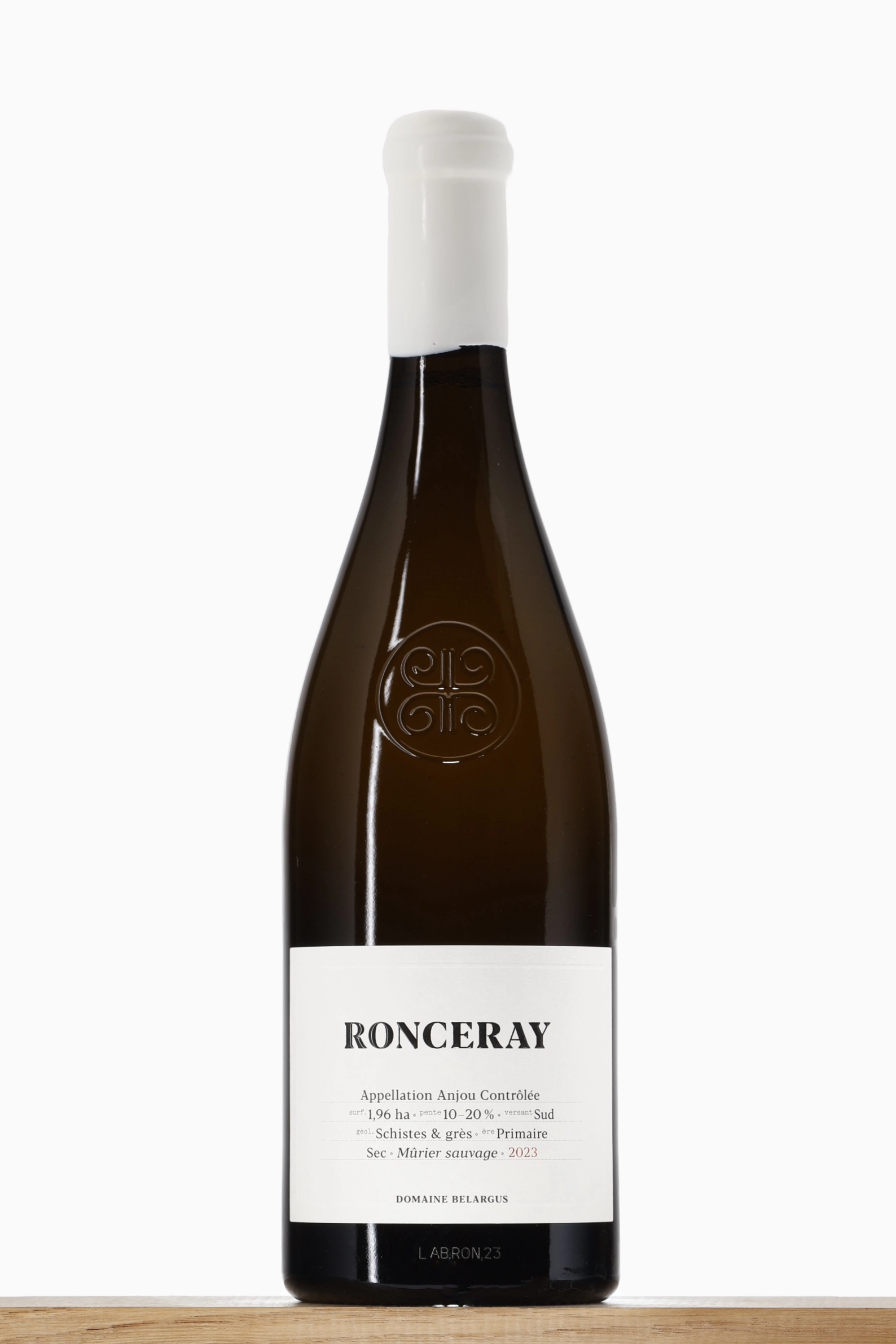
Anjou Ronceray 2023 Belargus
€40.00


-
 Master Cellar Expert Selection
Bottles chosen with passion, directly from the winemakers
Master Cellar Expert Selection
Bottles chosen with passion, directly from the winemakers
-
 Zero Breakage Guarantee
Every order carefully packed, each bottle individually protected
Zero Breakage Guarantee
Every order carefully packed, each bottle individually protected
-
 Tax-Free / Worldwide Shipping
VAT automatically deducted at checkout for non-EU customers, Global Blue in-shop
Tax-Free / Worldwide Shipping
VAT automatically deducted at checkout for non-EU customers, Global Blue in-shop
Product Details
- Format
- 75 cl
- Region
- VAL DE LOIRE
- Vintage
- 2023
- Classification
- VILLAGE
- Appellation
- ANJOU
- Alcohol
- 12.5°
- Colour
- White
- Country
- FRANCE
- Taster
- Adrien
A dry Anjou white from Belargus, 100% Chenin Blanc with mineral tension, white flowers, citrus and honey. Precise, vibrant and deeply elegant.
Anjou Ronceray 2023 Belargus is a serious dry Loire white made from 100% Chenin Blanc by one of the most ambitious producers in Anjou Noir. With Belargus, Ivan Massonnat pursues a parcel-by-parcel, high-calibre reading of Angevin terroirs, inspired by the climat approach of Burgundy. The Ronceray cuvée comes from a blend of parcels on the ridge of Quarts-de-Chaume, where schist and puddingstone soils give the wine its tension, depth and the fine noble bitterness characteristic of the area. The domaine works biodynamically and focuses exclusively on Chenin, with remarkable rigour in the pursuit of purity and precision.
In the glass, Anjou Ronceray 2023 seduces with a profile both ample and incisive, where white fruits, flowers, ripe citrus and struck stone interweave. The palate is taut and vibrant, driven by slicing minerality, refined structure and a long, saline finish with subtle bitterness that underscores the terroir's nobility. This is a gastronomic white Anjou, made for fine fish, shellfish, creamed poultry or aged cheeses. Already very appealing in its youth after aeration, it also has genuine ageing potential, gaining complexity over time.
In the glass, Anjou Ronceray 2023 seduces with a profile both ample and incisive, where white fruits, flowers, ripe citrus and struck stone interweave. The palate is taut and vibrant, driven by slicing minerality, refined structure and a long, saline finish with subtle bitterness that underscores the terroir's nobility. This is a gastronomic white Anjou, made for fine fish, shellfish, creamed poultry or aged cheeses. Already very appealing in its youth after aeration, it also has genuine ageing potential, gaining complexity over time.
You might also like these wines
military_tech
RESERVED
CONFRÉRIE